
Practical cleaning guide
Cleaning Aluminum Slat Blinds: Protect the Headrail and Check the Collection
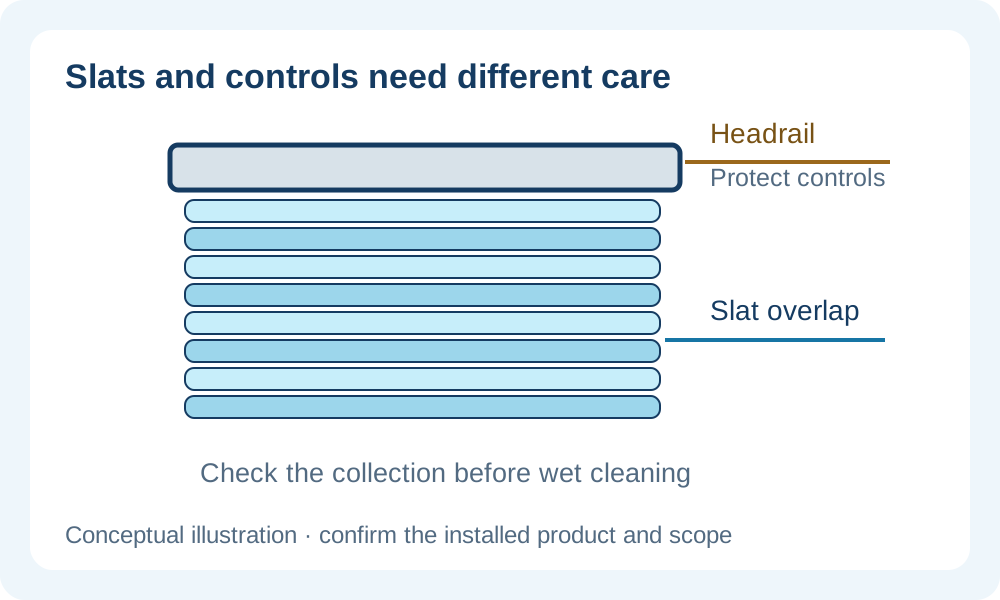
Office blinds with narrow horizontal slats collect dust where neighboring slats overlap. Cleaning only the front face can leave that line of soil behind, but forcing the slats apart or soaking the whole unit can introduce another problem. Identify the product and control system before choosing an ordinary dust-removal method.
Confirm the slats, trim and controls
Ask for the manufacturer, collection and care sheet. A metallic appearance does not establish that every component is aluminum. Decorative wood trim, fabric tapes and powered or assisted controls may need different care. Check for bent slats, loose brackets or damaged cords before cleaning, and report those conditions rather than trying to straighten or repair them.
Hunter Douglas’ metal-blind guidance recommends a soft clean dusting cloth or mitt. It describes lowering the blind fully and tilting slats nearly down, rather than closing them completely, to reach overlap areas. That is guidance for its products; follow the installed blind’s instructions and do not force its mechanism to reproduce another product’s position.
Remove dust with light support and clean tools
Where the installed care sheet permits it, support the accessible slat gently and use a clean soft tool without pressing the edges out of shape. Work in manageable sections rather than pulling on a group of slats. Keep removed dust from falling onto confidential papers or occupied workstations; arrange access and protect the desk before starting.
Hunter Douglas also permits a brush vacuum attachment in its metal-blind guidance. Use that example only when the actual collection allows it, with controlled contact that does not catch tapes or deform slats. Do not use compressed air to blow dust around an occupied office as a substitute for a planned collection method.
Immersion permission is not universal
The same manufacturer’s immersion example applies to Modern Precious Metals aluminum blinds and excludes Natural Elements. It also identifies decorative-tape and named control-system restrictions, including headrails that must not be immersed. Do not turn those examples into permission to put an unidentified blind, motor or headrail into water.
- Use the exact collection and control name to obtain current instructions.
- Keep routine dusting separate from removal and wet cleaning of an assembly.
- Ask an authorized responsible person to handle removal or reinstallation when required.
- Do not disconnect motors, remove safety fittings or release cord-tension devices to make cleaning easier.
- If a suitable method is unclear, hold the wet-cleaning task and ask the manufacturer or installer.
Protect blinds during nearby glass cleaning
Hunter Douglas advises putting window cleaner on a cloth rather than spraying the window directly, to avoid splashing onto blind finishes. Keep that adjacent-work issue in the cleaning plan. Glass residue removal and blind care should each use their own compatible method; a cleaner accepted for the window is not automatically acceptable on the blind.
Do not escalate to solvents, abrasive scrubbing or ultrasonic cleaning because dusting leaves a mark. Hunter Douglas excludes those methods in this guidance. Persistent discoloration, finish changes and damaged slats need assessment rather than a promise that every mark can be removed.
Quote reachable blind care accurately
For an office or authorized commercial lounge in Orange County, Chino Hills, Chino, Ontario, Corona or Eastvale, tell JLV the blind collection if known, reachable areas and whether the request is routine dusting or a separate assessment. Work at height, assembly removal and repair are not automatic inclusions. JLV reviews access, scope and availability before accepting work.