
Practical cleaning guide
Cleaning Automatic Entrance Door Surfaces: Arrange Safe Access Before Wiping
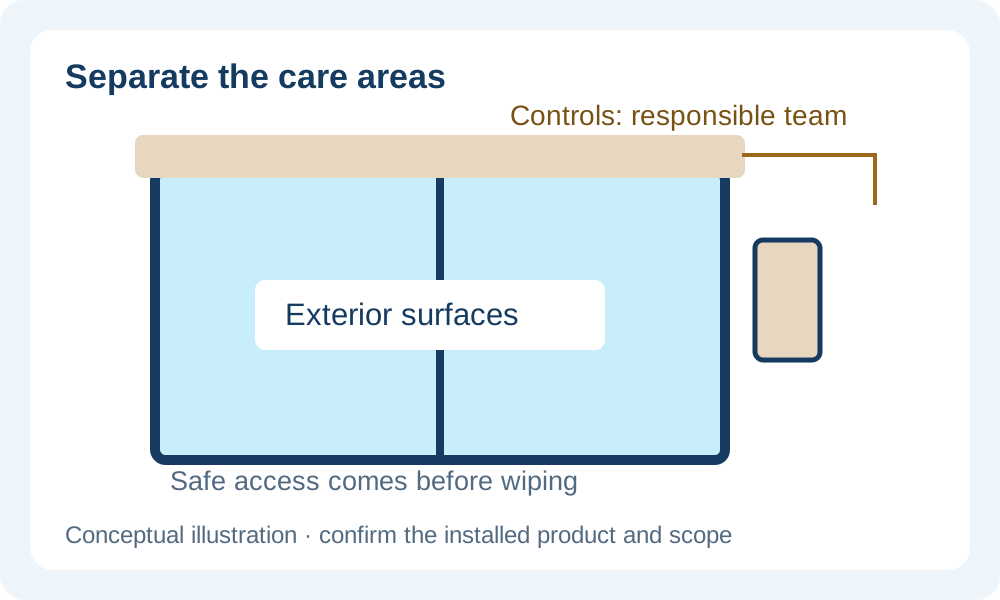
Fingerprints and tracked dirt around an automatic entrance can be ordinary cleaning concerns. The moving door assembly is not. Before a cloth reaches its glass, frame or accessible edge, arrange a safe stationary condition through the building’s authorized personnel and the installed door’s instructions. Do not try to keep the door still by standing in a sensor zone or wedging it open.
Identify the door and assign the shutdown
Collect the model and owner’s manual, and identify who can authorize the cleaning window. The ASSA ABLOY SL500 Resilience manual requires the supply to be disconnected for cleaning or other maintenance. That is a specific instruction for that assembly, not a general switch sequence for every automatic door. The cleaning crew should ask the responsible facilities or door-service personnel to establish the required condition; this guide does not authorize electrical work.
Do not treat a selector labelled OFF as proof that every energy source or door movement is controlled. If the responsible person cannot establish the condition required by the installed system, hold the affected cleaning task. Keep the entrance out of use under the building’s approved access plan and arrange an appropriate alternative rather than changing an exit route independently.
Separate accessible surfaces from equipment
- List the reachable exterior glass and frame surfaces included in ordinary cleaning.
- Keep sensor housings, controls, operator covers and mechanisms outside that task unless their own instructions and authorized responsibilities are established.
- Ask who handles accessible weatherstripping care and who reports damaged seals.
- Record any applied glass film or special frame finish before choosing products.
- Assign restoration of normal operation and required safety checks to the responsible facilities or door-service team.
The SL500 Resilience manual describes water with a soft cloth or sponge for ordinary dirt, with a gentle detergent permitted. It excludes alkaline products, high-pressure water, polishing detergent and abrasive scrubbing materials. Use those limits only for the confirmed model and surface; an applied glass film or another manufacturer’s finish may carry additional restrictions.
Control the liquid and keep the task narrow
Once safe access and the approved surface method are confirmed, work with clean tools and controlled moisture. Do not hose the entrance or spray broadly across sensors and controls. Protect adjacent floor finishes and remove drips promptly under the approved floor-care method. A dry-looking frame does not establish that water inside an assembly has been avoided.
Cleaning a door face does not include adjusting rollers, lubricating tracks, opening the operator or changing sensor settings. If a guide channel contains bonded construction residue or a component is loose, report the exact location instead of scraping or dismantling it. Unknown renovation dust needs the project’s assessment before disturbance.
Hand back the entrance, not a safety certificate
Record which surfaces were cleaned and any unresolved marks or damage. Have the authorized responsible person return the door to service and complete the checks required for that installation. A clean surface does not establish that the automatic-door safety system passes inspection. Operator servicing, testing and certification remain outside this surface-cleaning task.
For a business entrance, theater lobby or specifically authorized landside FBO interior in JLV’s service area, describe the accessible surfaces and the person responsible for safe access when requesting a quote. Orange County, Chino Hills, Chino, Ontario, Corona and Eastvale inquiries are reviewed for scope and availability. Equipment service, airside work and hazardous-material handling are separate responsibilities.